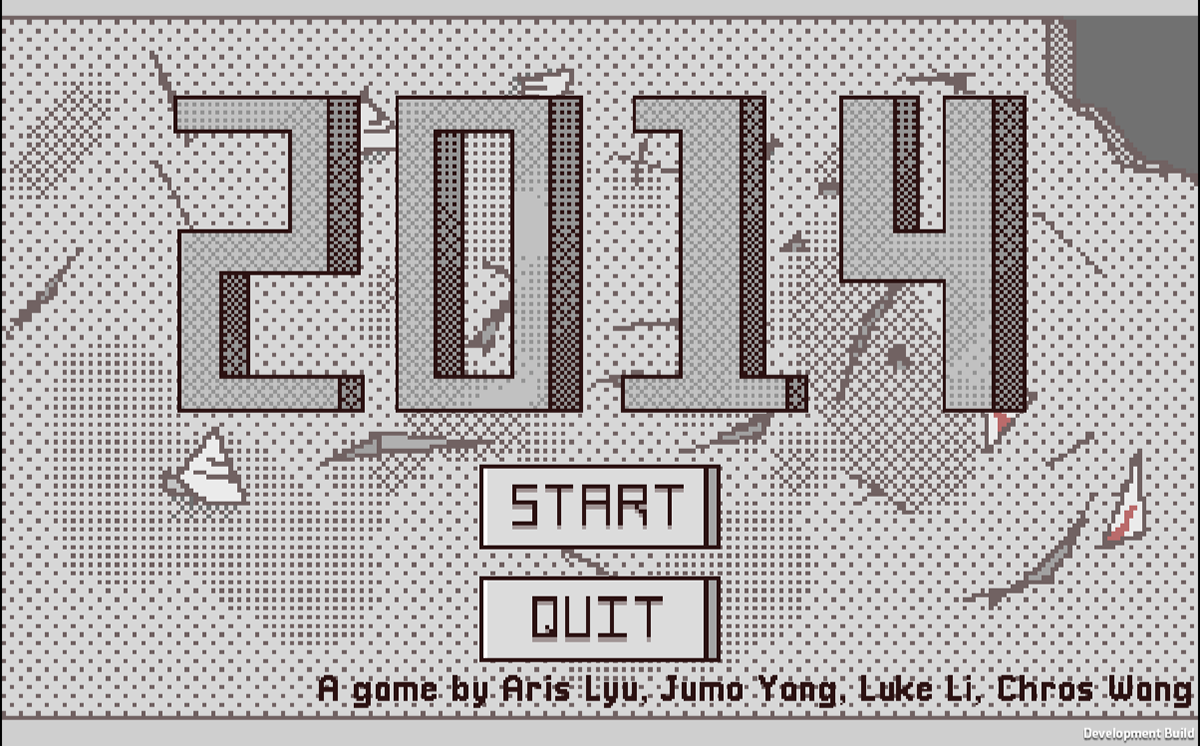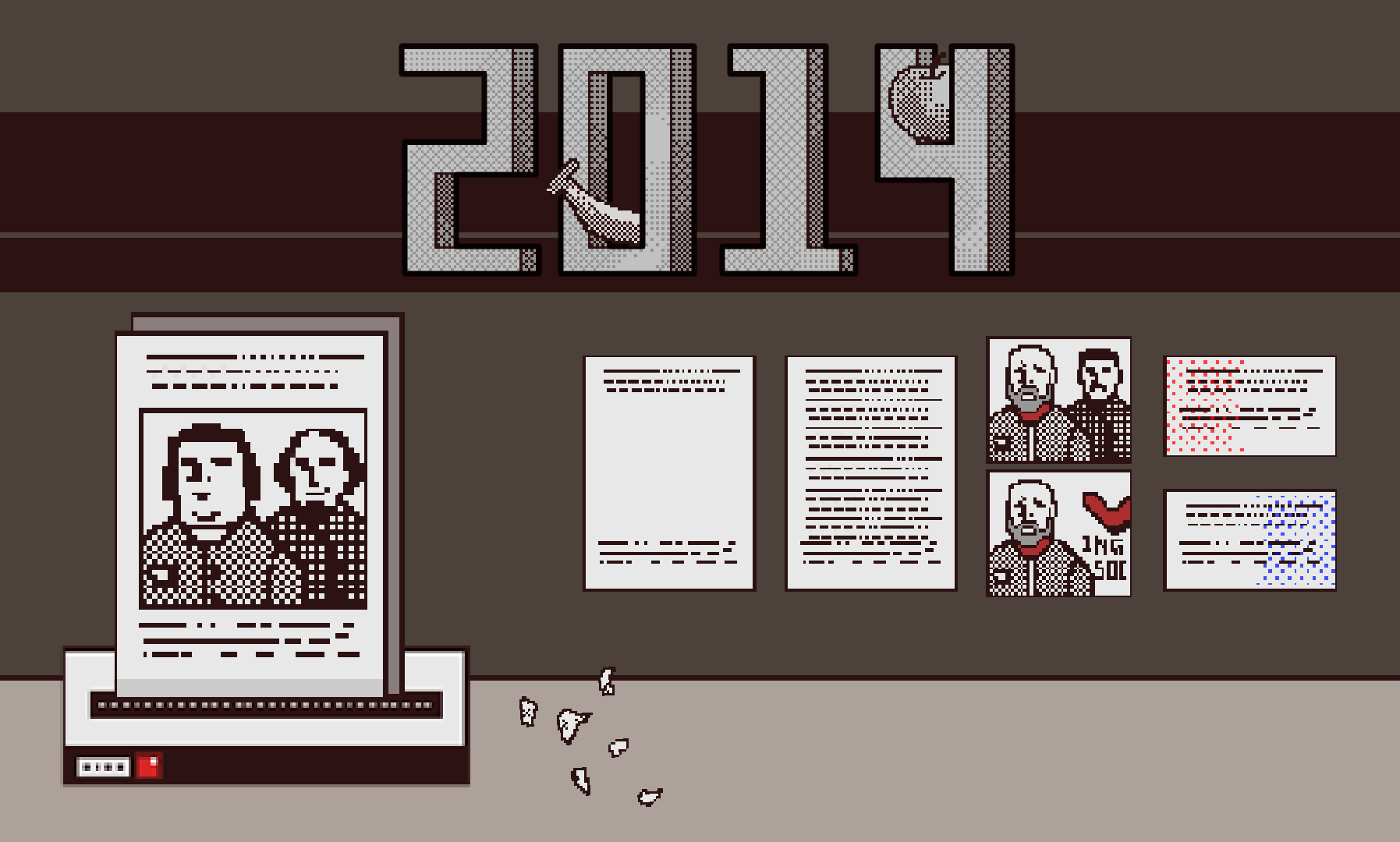
It's 2014. Thirty years have passed.
You are still you, the "Big Brother".
Genre: Narrative, Simulator
Engine: Unity
Platform: itch.io
Production Period: 1 month
Role: Lead Designer, Narrative Designer, Writer
Inspiration
The original concept of Twenty Fourteen stems directly from the team members’ interest in George Orwell’s novel, Nineteen Eighty-Four. Inspired by the totalitarian society portrayed in the story and frightened by what individuals’ life would be like under the tyranny of a dictator like the Big Brother, we want to take a look at the story from a different perspective by focusing on the Big Brother, who acts as a mysterious symbol rather than an appearing character in the original work. We also discovered our interest in expanding the worldview of 1984 and seeking its possibility in a more distant future. The result of such inspirations became Twenty Fourteen, the continuation of Orwell’s Nineteen Eighty-Four, set in 30 years after the end of the novel.
The fascination of a dystopian future society is irresistible. Such a concept broadly opens up designers’ imaginations. The combination of diving into the most primitive nature of human beings and discovering fancy future technologies is one that draws all of the team members’ attention to. 1984 differentiates itself from other similar works by adopting vocabulary that vividly represents both the concept and the context. Through the interesting design of technologies, the audience is also able to perceive the actual terror of a totalitarian society that monitors its people at all times. Based on these aspects, we chose to expand on the original work in mainly two areas: the worldview and the characters.
Game Loop
Main Responsibilities
Game Design
• Designed the game world based on George Orwell's "1984", set the timeline to 2014 to depict the daily life of "Big Brother", who is now in his late 80s.
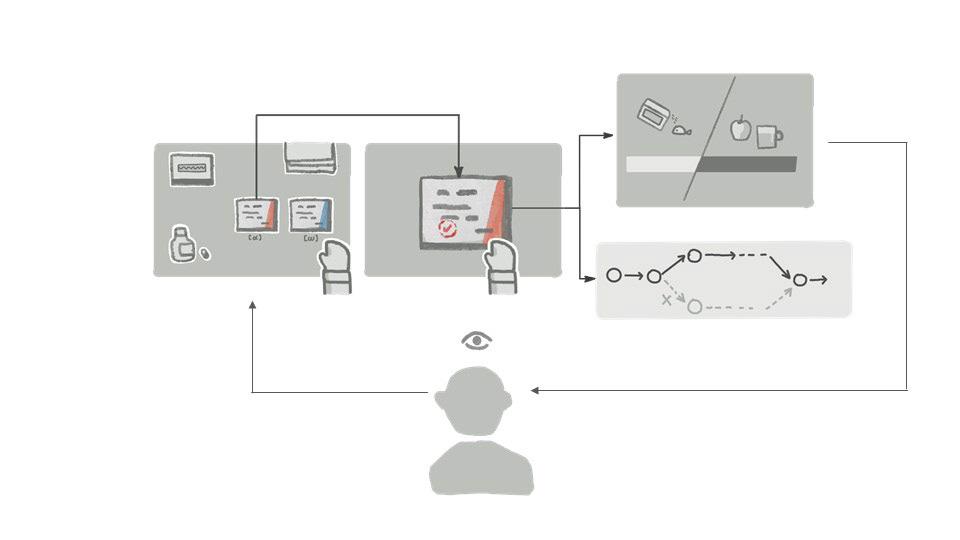
• Designed the core game loop of reviewing documents, making executive decisions, and reflecting through leisure activities.
• Designed the main storyline and all branching narrative. Wrote all in-game texts and documents.
Project Management
• Led and managed a cross-functional team of 4 to ensure the delivery of the game project within a month of production timeline.
Challenges
The challenge of continuing the worldview design is how to incorporate our original thoughts carefully without breaking the rules established by the original work. As such, the initial stage of brainstorming largely focused on defining the current state of all concepts from the original on top of designing new ideas. As the setting of 2014 is 30 years later, to portray Oceania’s increase in power, we decided to introduce Oceania as the only superstate in the world. While the people of Oceania are instructed to believe that both Eastasia and Eurasia are defeated already, following the same manner as in the original 1984, it is never explicitly clarified if the case is true or not. On the other hand, to ensure that Oceanians are satisfied with their living conditions, a distinct comparison is necessary. The result of this is the statement that the rest of the defeated Eurasians have escaped to the Moon where they suffer from an extremely terrible living condition. This is also a metaphor for our actual world, where countries would exaggerate negative facts about other parts of the world in order to make citizens content.
Designing the Big Brother was the most interesting yet challenging part of the project. Much space has been left to us for the character’s mostly symbol-like presence in 1984. However, this also openly challenges us to design the character in a style that best presents a totalitarian dictator to our audience. Diving into the mentality of an old dictator, we decided that the incapability to stay in control and fear of losing power should be the direction that we present Big Brother to our audience. However, we would also like to express the irony of a dystopian totalitarianism where there has never been any chance of overthrowing as long as the dictator sits on his throne. Combining such thoughts, we were able to have the main plot of the game, where Big Brother struggles to stay in power as the New Brotherhood is on the rise to take over the nation. The two supporting characters in the game, Darwin Stewart and O’Connor, serve to have opposite influence on players’ mentality. Stewart, Big Brother’s son, is portrayed as dedicated to technological development and communicates on a much less frequency compared to O’Connor. O’Connor, on the other hand, often sends reports to Big Brother exposing potential individuals who are involved with the New Brotherhood.
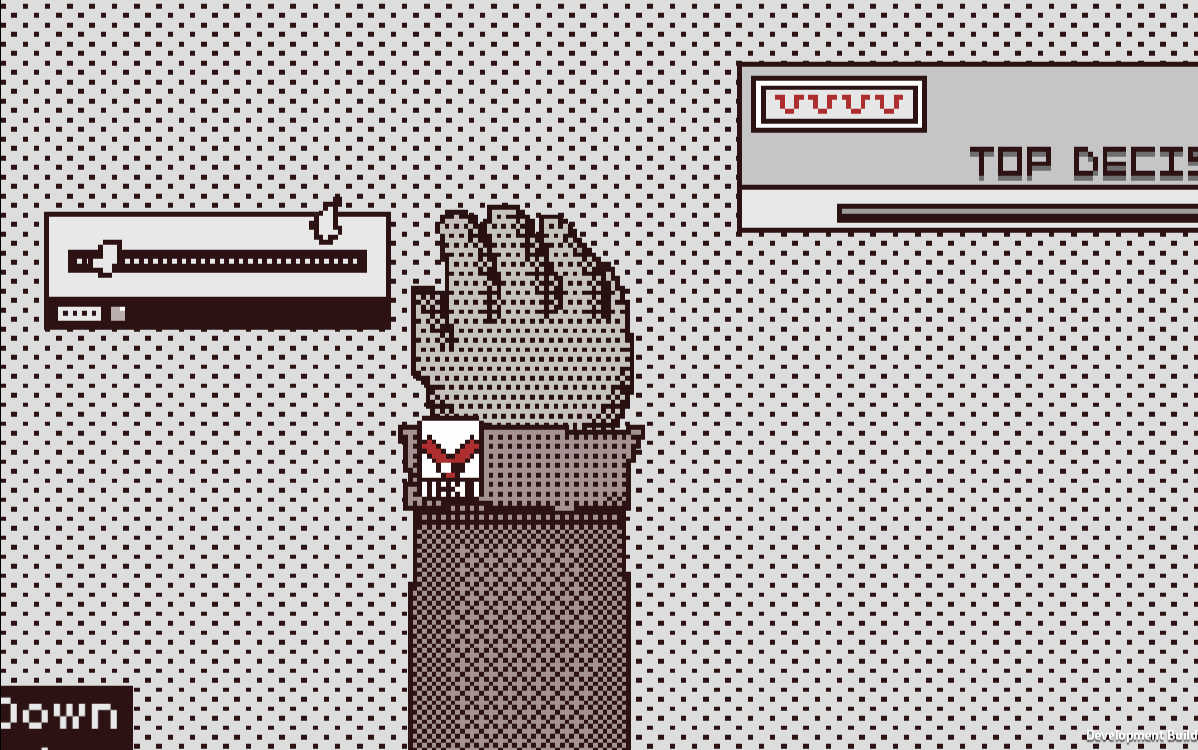
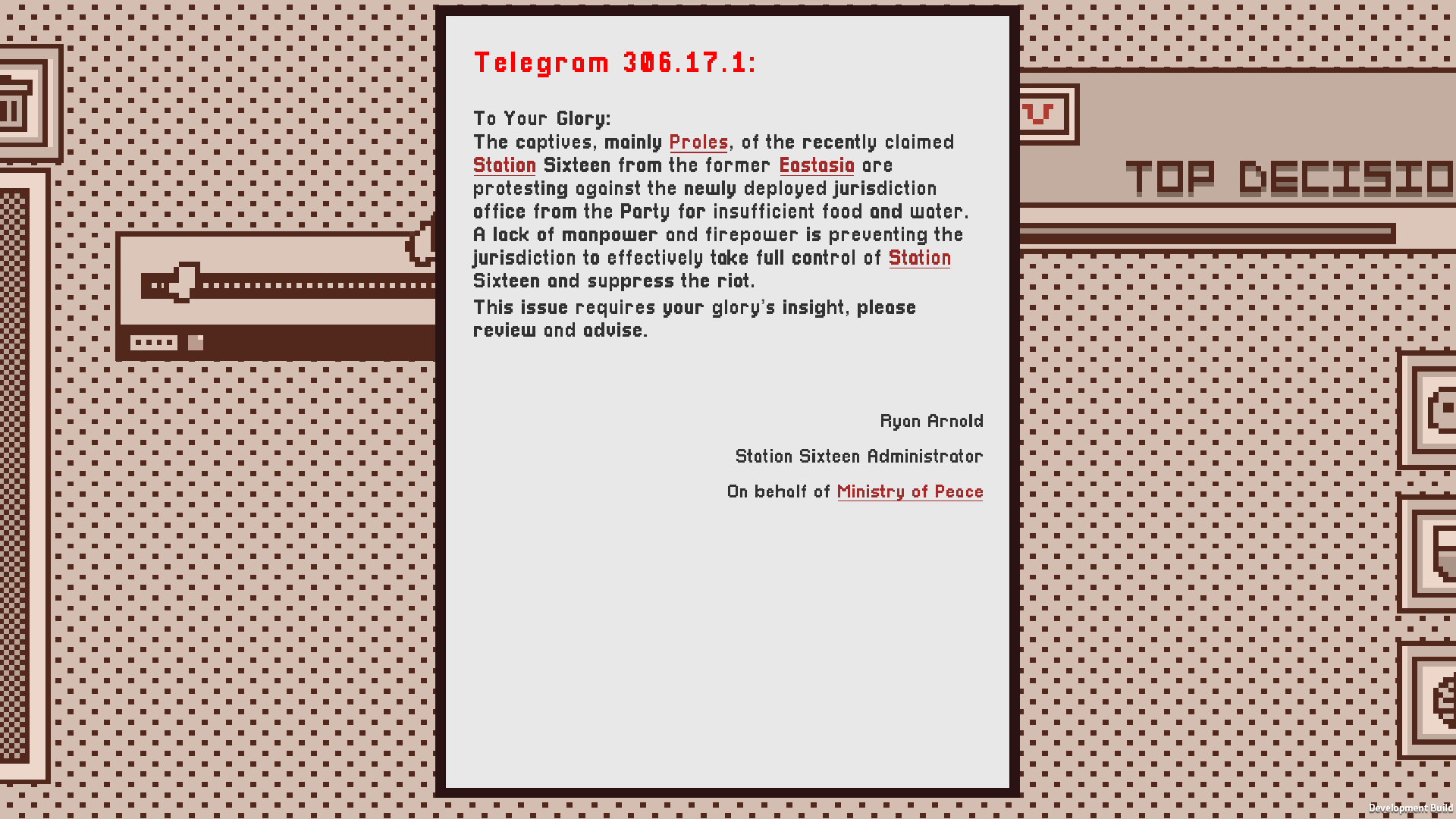
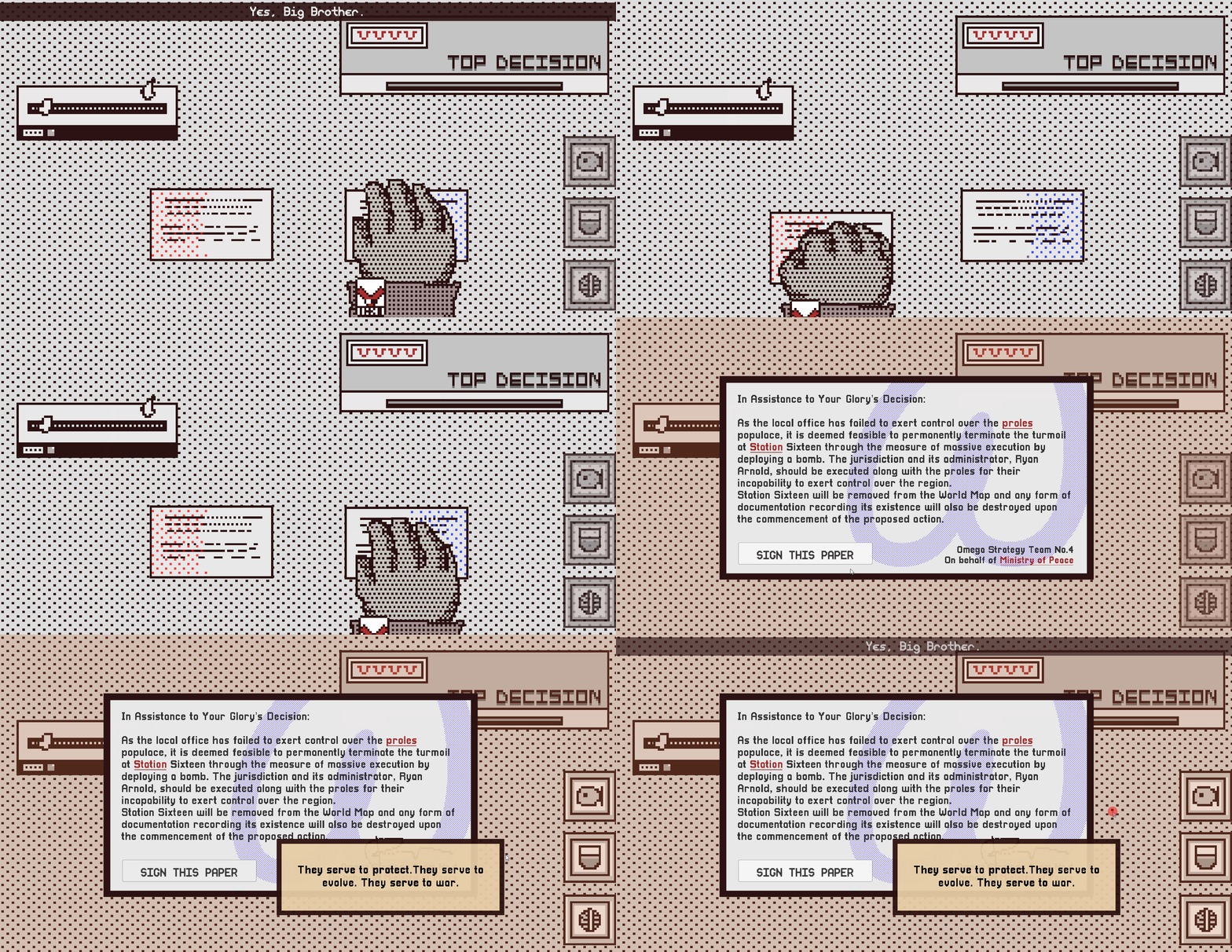
In terms of the actual interaction, following our decision to not show any expressions or thoughts from Big Brother, we decided that it would be interesting to tell the entire story through documents. By designing a table simulator, where players interact with objects and read through files, a concise structure exists to keep players limited while offering enough freedom for exploration. This design also incorporates visual novel elements where players would have to choose between two decisions as either proposals or versions of reality to be told. For the fact that the main character is Big Brother, having the documents present information to players will be a reasonable way through which the worldview, the characters, and all concepts are introduced.
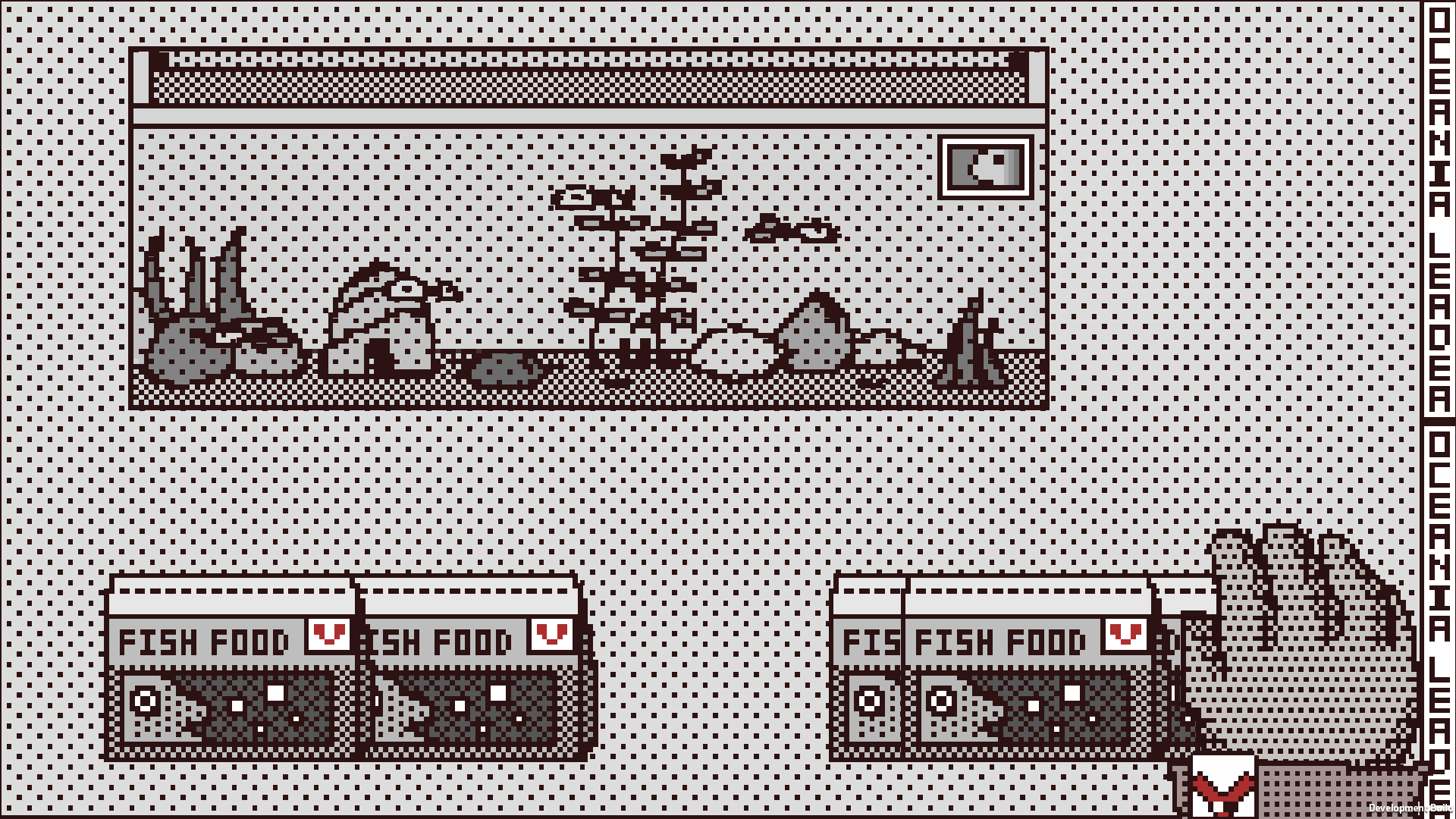
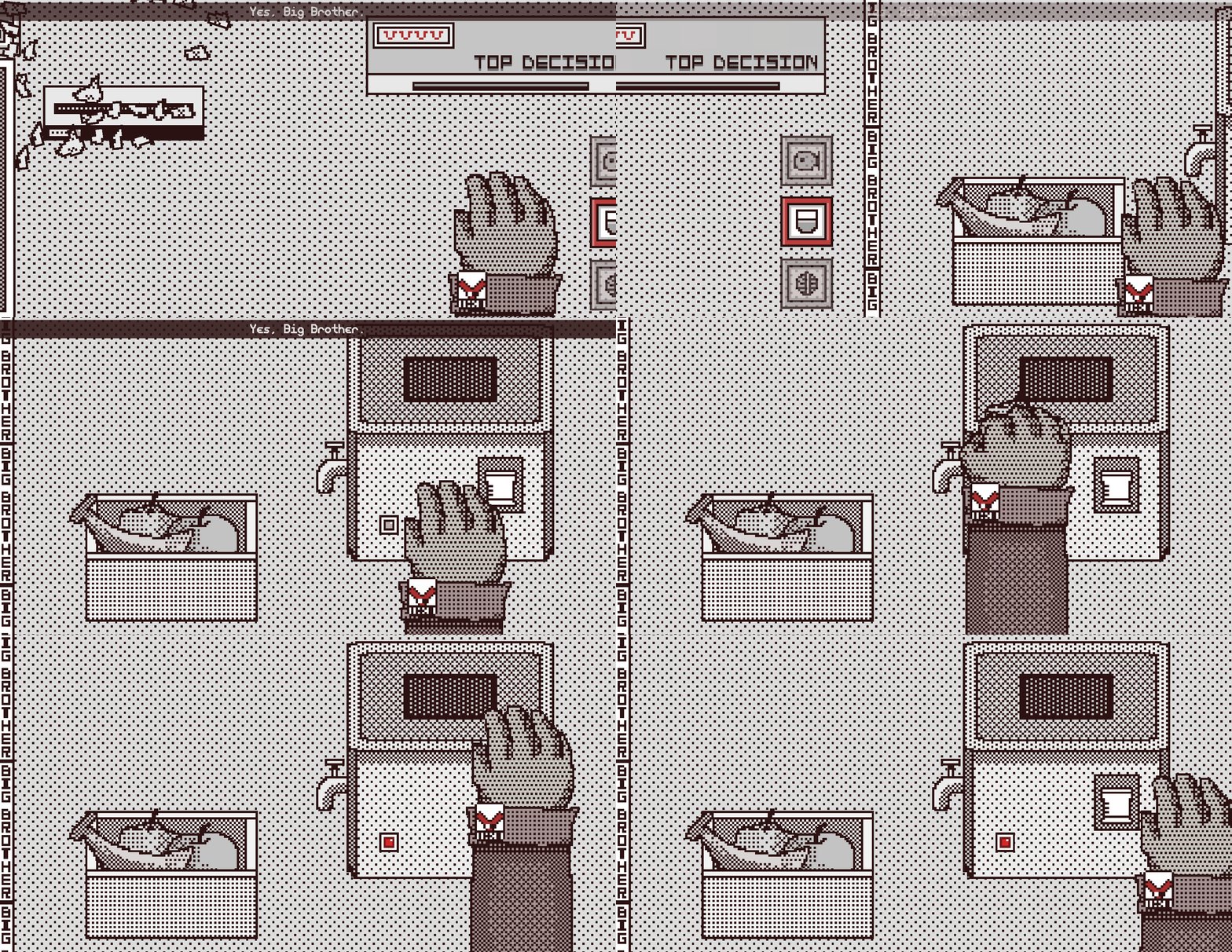
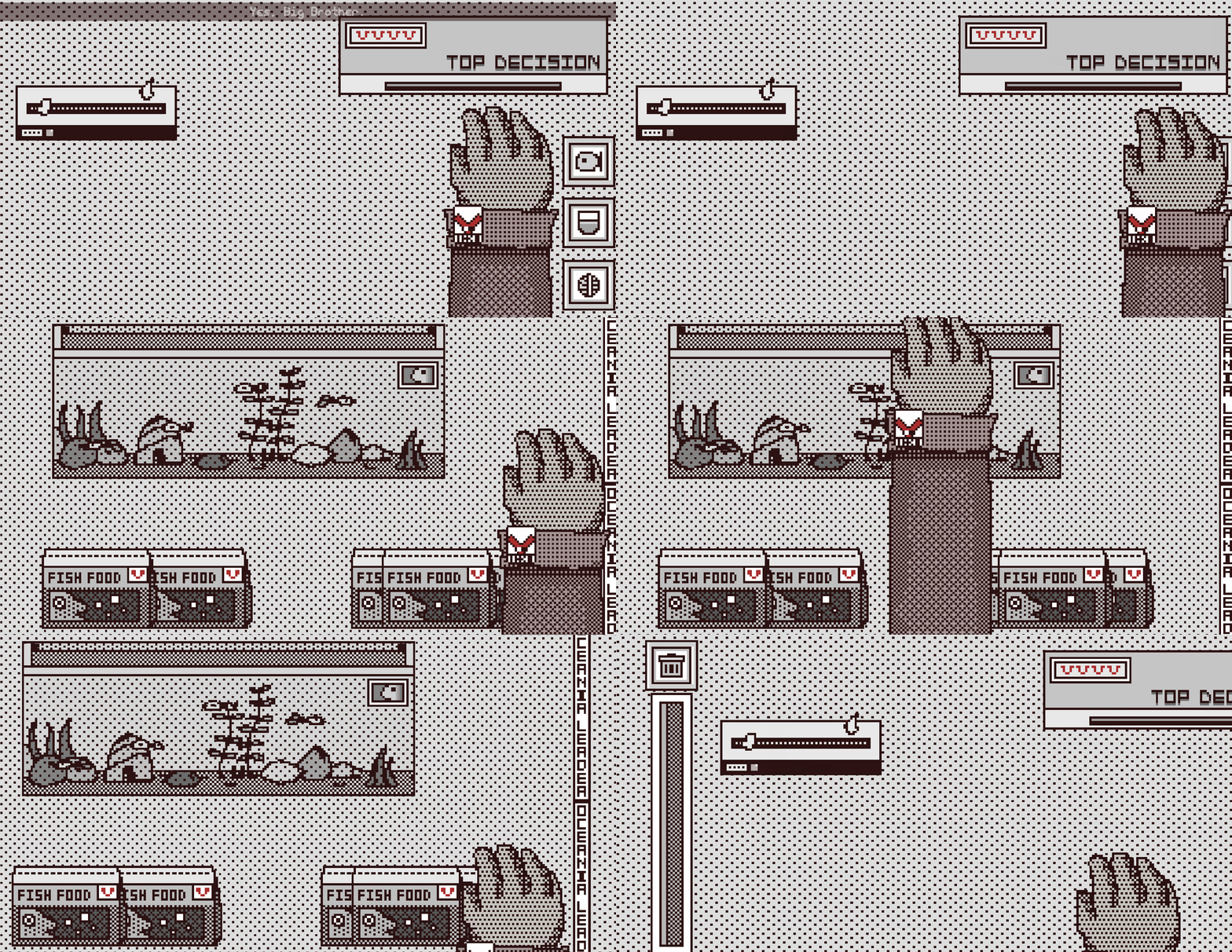
The challenge, however, is providing feedback after players make a decision. In traditional visual novels, information is given at the moment when a decision is made. With the document system on top of the decision to not show internal thoughts, feedback has to come in a different direction. The structure of the story, or the documents, is that players continuously receive files as telegrams, proposals, news versions, classified and personal messages through a machine. As a result, it would make sense if the file following a decision does not provide instant feedback corresponding to the decision made. Based on this observation, we made the decision to provide feedback in the form of metaphors. Four types of small actions: using a blender, watering plants, feeding fish, and taking out trash are positioned at different locations on the table where Big Brother handles documents. Using the blender represents killing, watering plants means lying to the public, feeding fish is for allocation, and taking out trash happens whenever people are sent to be tortured and questioned. Originally the team wanted the feedback to be coherent and the connection understood by our players easily. The result was the implementation of a forced camera pan to the location of the four actions upon making a decision. However, many of our playtesters were confused and unable to draw connections between the decision and the action. To improve the experience and give players more freedom, we redesigned the system by adding four buttons on the table, each corresponding to a feedback action. After making a decision, players will be notified by a lit button, suggesting a possible feedback if they press it.
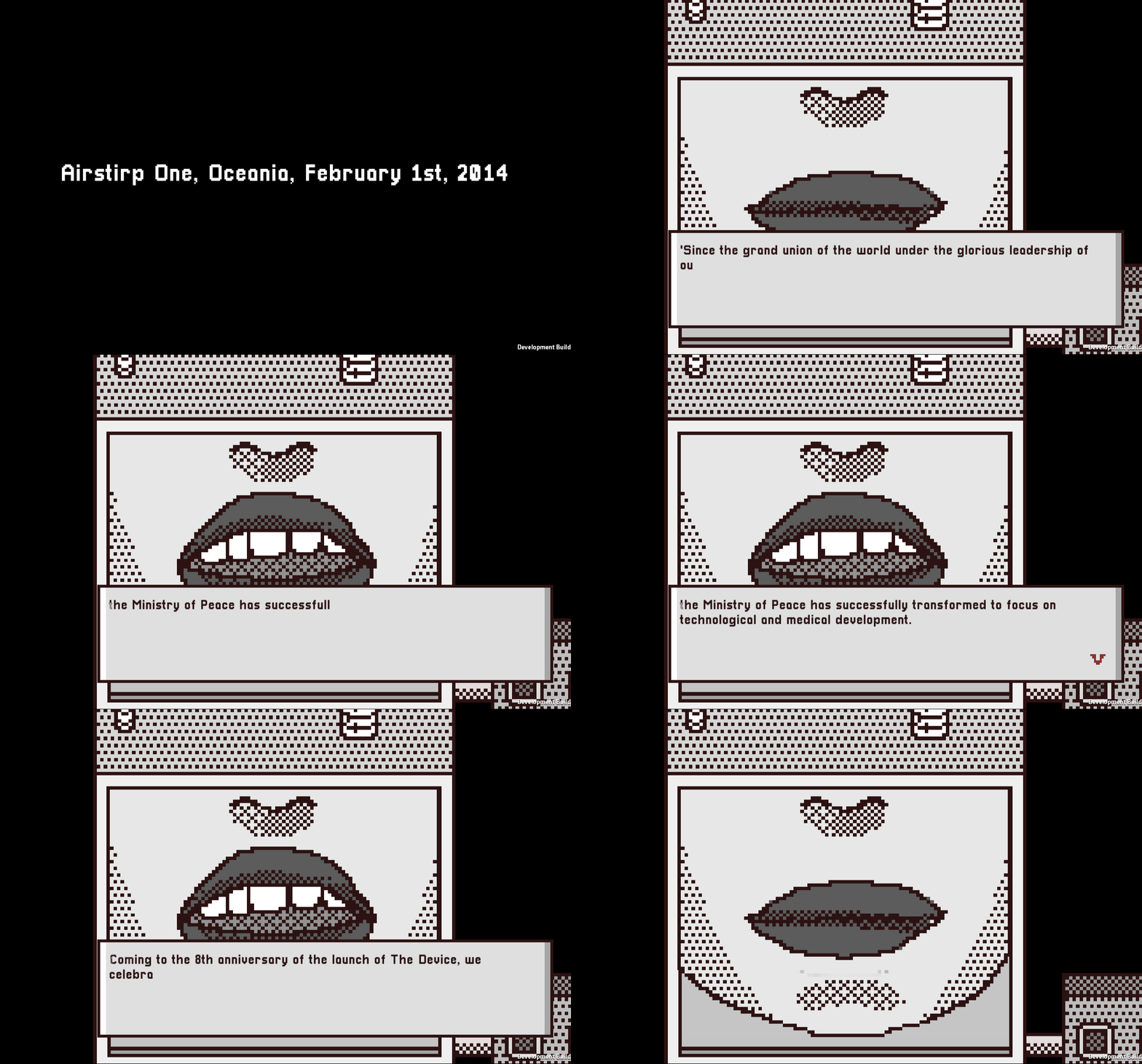
The final challenge that we faced was explaining the original concepts to our players. For the fact that we did not wish to adopt cutscenes just to explain the setting and specific terminologies, we came up with a smart solution to have an index-like window that pops up whenever players hover their mouse over specific terminologies. Furthermore, through the explanation of such terms in Big Brother’s tone, players are able to get a bit insight as to how the main character sees this world, and make sure the players acknowledge that they are playing as the Big Brother, overseeing everything happening in this dystopian world.
Galleries